2011年11月3日星期四

Details on Apple Retail's New In-Store Pick Up and Self Check Out Process

Details on Apple Retail's New In-Store Pick Up and Self Check Out Process: MacRumors had previously revealed some interesting changes coming to Apple Retail stores this Thursday. These changes include an expansion of the ability to pick-up online orders at Apple Stores as well as a surprising new self-check out capability. These new features will be released as an update to the Apple Store App in the App Store.


As reported on BGR, the new system works as follows:


Online Orders with In Store Pickup and Returns


- For standard in-stock items, the product will become available to pickup in about 12 minutes. This provides the system enough time to send the order to the store, and allow Apple Retail employees to set aside items for pickup. Customers will be able to skip lines, and simply have to sign for them and leave.


- For build-to-order, engraved devices or other out-of-stock items, Apple will ship the items to your local Apple Store for free. Customers will receive a pick-up date and a push notification to the App will let you know when it has arrived. Again, 12 minutes from the push notification, the order will be ready for pickup


- Apple expects the majority of customers will eventually use in-store pick up for buying products.


- Customers will be able to return items purchased online to retail stores.


Self Check Out


This is an even more interesting feature that Apple is deploying that will help streamline the Apple retail experience. Apple will be allowing customers to use the Apple Store app to buy smaller items such as accessories while in the store. Customers won't have to even talk to a retail employee:
Here is how this will work: after you find the item you want to buy, like an accessory, you launch the Apple Store app on your iOS device and there will be an option to buy a product in the store. You scan the product with the camera on your device in the app, click purchase, and it will charge whatever credit card is associated to your Apple ID. You then just walk out of the store.
According to BGR, Apple will not be manually verifying purchases.


Both In-Store Pickup and Self Check Out are expected to be launched on Thursday, November 3rd worldwide.


Apple to "Completely Overhaul" the iPad, iMac, iPhone and MacBook Air in 2012?

Apple to "Completely Overhaul" the iPad, iMac, iPhone and MacBook Air in 2012?: Digitimes claims that Apple is going to "completely overhaul" its product lineups in 2012. The site specifically lists the iPad, iMac, iPhone and MacBook Air lines.


It's not clear if this is an all inclusive list or not. Notably absent are the MacBook Pro, Mac mini, Mac Pro and iPod lines.
Apple plans to completely overhaul its product lineups, including iPad, iMac, iPhone and MacBook Air, in 2012 and is expected to finalize order volumes for key parts and components for the next-generation iPad in December, according to sources in the upstream supply chain.
We interpret the report to mean new designs for the listed product lines.


The iPhone seems the most likely of the bunch to get a full redesign. In fact, we may have already seen a glimpse of what the next iPhone might look like. Tapered iPhone 5 case designs leaked in China flooded the market in mid 2011, leading to the belief that Apple would be releasing such a design this fall.


Apple ended up releasing the iPhone 4S instead, which shares the same design as the previous generation iPhone 4. Based on Apple's release pattern, however, it seems certain that the 2012 iPhone will receive a new external design.


The iMac design has remained relatively stable in design over the past few years. Given the constraints of the design, we're not sure how drastic a change we could see in the iMac.


The iPad has only seen two releases, each with a slightly different design. Again, the basic design constraints will limit it to a 9.7" display, but another report has suggested the 2012 design will be an even thinner design.


Finally, the MacBook Air. While we're certain that the MacBook Pro will see new design next year, how it integrates with the MacBook Air line remains to be seen. Rumors of a 15" Air-like design have been circulating since July. We expect that the Air and Pro lines will have to eventually merge into one. Intel believes that the Air form factor will dominate the consumer market in the near future.


Recent Mac and iOS Blog Stories

• Apple Moves Closer to Swedish Retail Store Openings with New Business Registration

• Apple Turns on iTunes Match for Apple TV with New 'Music' Section

• Yahoo Introduces Livestand for iPad, a Flipboard-Like "Living Magazine"

• Native Gmail Client for iOS is Released [Update: App Pulled]

• Video of 75-Minute 1995 Interview with Steve Jobs


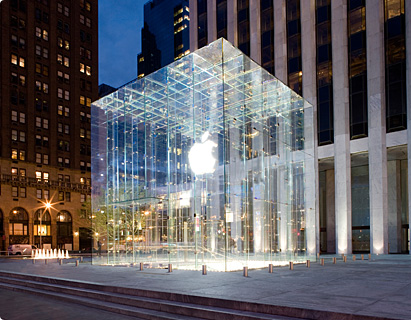
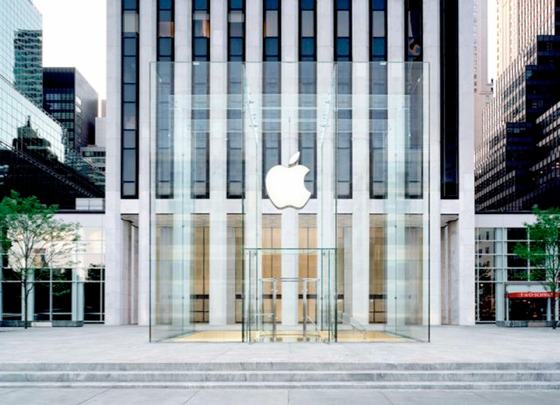
Apple to Unveil New 5th Avenue Apple Store at 10am Friday

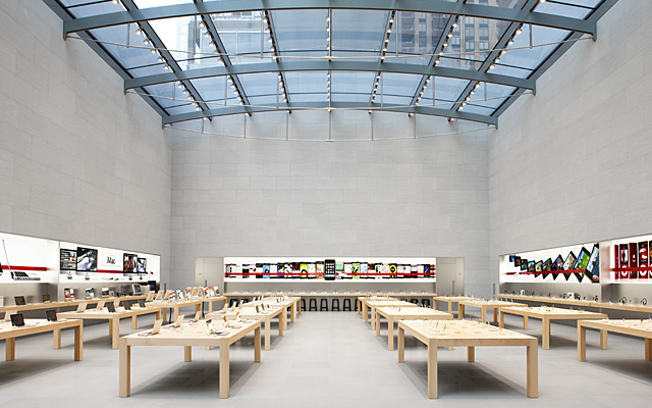
Apple to Unveil New 5th Avenue Apple Store at 10am Friday: As we'd previously reported, Apple appears to be preparing to unveil the new 5th Avenue Retail Store for Friday.


MacRumors reader Will submitted this photo which shows construction workers starting to remove part of the white covering from the store's new glass panes.


Apple's $6.6 million renovation started back in June and involved replacing the cube's 90 glass panels (Photo of old design) with a much simpler 15 glass panel design (Artist rendition).


Will reports that today they've torn away much of the white covering along the bottom of the store. This area remains hidden from the street level view due to the surrounding construction barriers. Workers have been power-washing the ground, presumably in preparation for the grand unveiling.


We'll post more photos as we get them, readers can submit photos to us via email.


As noted on Apple's 5th Avenue Retail page, the store will be closed from 10pm to 10am:
We'll be closed starting at 10:00 p.m. on Thursday, November 3 and will reopen at 10:00 a.m. on Friday, November 4.


Thanks Dries


Recent Mac and iOS Blog Stories

• Batman: Arkham Asylum Arrives On the Mac App Store

• Case-Mate Introduces Tank, A "Military-Grade" iPhone Case

• Jawbone's UP Wristband Tracks Activity, Movement and Sleep

• Apple Moves Closer to Swedish Retail Store Openings with New Business Registration

• Apple Turns on iTunes Match for Apple TV with New 'Music' Section


How Apple Uses its Supply Chain as a Strategic Weapon

How Apple Uses its Supply Chain as a Strategic Weapon: Businessweek provides a very interesting look behind Apple's supply chain and how they have managed to fine tune their operations into a competitive advantage.
According to more than a dozen interviews with former employees, executives at suppliers, and management experts familiar with the company’s operations, Apple has built a closed ecosystem where it exerts control over nearly every piece of the supply chain, from design to retail store.
Apple's well known to be a master at operations with much of that credit going to now CEO Tim Cook. Businessweek's profile gives many examples of how Apple has managed to stay ahead of the competition, with much of it being the ability to predict needs and also secure the necessary pieces by exercising their enormous $81 billion cash hoard.


Even as far back as the launch of the bondai blue iMac in the late 90s, Apple's Steve Jobs paid $50 million to buy up all available holiday air freight space at a time when most of its competitors were shipping by sea. This reportedly handicapped rivals such as Compaq who later wanted to book air transport.


Similarly for both the iPhone 4 and iPad 2 launch, Apple bought up so many suppliers and machines needed for assembly, they squeezed out the competition who needed the same resources.
The tactic ensures availability and low prices for Apple—and sometimes limits the options for everyone else. Before the release of the iPhone 4 in June 2010, rivals such as HTC couldn’t buy as many screens as they needed because manufacturers were busy filling Apple orders, according to a former manager at HTC.
Apple's level of efficiency and control extends into launch day where factories work for weeks building hundreds of thousands of devices. Electronic monitors are placed in part boxes to discourage leaks and and shipped in non-descript boxes to avoid detection. Even in their retail stores, they can monitor demand by the hour and make supply chain adjustments as necessary.


Recent Mac and iOS Blog Stories

• Batman: Arkham Asylum Arrives On the Mac App Store

• Case-Mate Introduces Tank, A "Military-Grade" iPhone Case

• Jawbone's UP Wristband Tracks Activity, Movement and Sleep

• Apple Moves Closer to Swedish Retail Store Openings with New Business Registration

• Apple Turns on iTunes Match for Apple TV with New 'Music' Section


How Apple Uses its Supply Chain as a Strategic Weapon

How Apple Uses its Supply Chain as a Strategic Weapon: Businessweek provides a very interesting look behind Apple's supply chain and how they have managed to fine tune their operations into a competitive advantage.
According to more than a dozen interviews with former employees, executives at suppliers, and management experts familiar with the company’s operations, Apple has built a closed ecosystem where it exerts control over nearly every piece of the supply chain, from design to retail store.
Apple's well known to be a master at operations with much of that credit going to now CEO Tim Cook. Businessweek's profile gives many examples of how Apple has managed to stay ahead of the competition, with much of it being the ability to predict needs and also secure the necessary pieces by exercising their enormous $81 billion cash hoard.


Even as far back as the launch of the bondai blue iMac in the late 90s, Apple's Steve Jobs paid $50 million to buy up all available holiday air freight space at a time when most of its competitors were shipping by sea. This reportedly handicapped rivals such as Compaq who later wanted to book air transport.


Similarly for both the iPhone 4 and iPad 2 launch, Apple bought up so many suppliers and machines needed for assembly, they squeezed out the competition who needed the same resources.
The tactic ensures availability and low prices for Apple—and sometimes limits the options for everyone else. Before the release of the iPhone 4 in June 2010, rivals such as HTC couldn’t buy as many screens as they needed because manufacturers were busy filling Apple orders, according to a former manager at HTC.
Apple's level of efficiency and control extends into launch day where factories work for weeks building hundreds of thousands of devices. Electronic monitors are placed in part boxes to discourage leaks and and shipped in non-descript boxes to avoid detection. Even in their retail stores, they can monitor demand by the hour and make supply chain adjustments as necessary.


Recent Mac and iOS Blog Stories

• Batman: Arkham Asylum Arrives On the Mac App Store

• Case-Mate Introduces Tank, A "Military-Grade" iPhone Case

• Jawbone's UP Wristband Tracks Activity, Movement and Sleep

• Apple Moves Closer to Swedish Retail Store Openings with New Business Registration

• Apple Turns on iTunes Match for Apple TV with New 'Music' Section


Apple Lossless 音樂無損格式宣布開源

Apple Lossless 音樂無損格式宣布開源:


由 Apple 所創造的 Apple Lossless 音樂無損格式(ALAC)宣佈開源


ALAC 並不真的無損,但在盡可能壓縮音樂檔案大小後,仍舊可以保持超高質量的聽覺享受。


其轉碼後的檔案大小,大約為原始檔案的 40% ~ 60%,如此高的壓縮率還可以接近無損真的很厲害!


不過檔案大小還是遠大於 MP3 格式,且僅有 Apple 一家的設備可以使用,所以幾乎沒有流通性與商業價值。(Gary 個人倒是把 Apple Lossless 當成由 CD 輸入音樂的第一選擇)


如今 Apple 宣布將此編碼開源,也許會有新的風貌也說不一定。


詳細的資訊可以參考:Apple Lossless Audio Codec


修正:


參考 wiki 的資料


閱讀全文

CNET UK 以動畫方式呈現 iPhone 的歷史,並以此短片紀念 Steve Jobs。

CNET UK 以動畫方式呈現 iPhone 的歷史,並以此短片紀念 Steve Jobs。:


影片來源:CNET UK


  這個月初時,CNET UK 公開了一部以動畫方式呈現的 iPhone 歷史影片,並以此短片紀念 Steve Jobs,有興趣了解 iPhone 歷史的朋友們,歡迎入內觀賞。


閱讀全文